Showing posts with label yamas. Show all posts

Tuesday, September 3, 2013

Aparigraha (Non-Hoarding) and Healthy Aging

by Ram
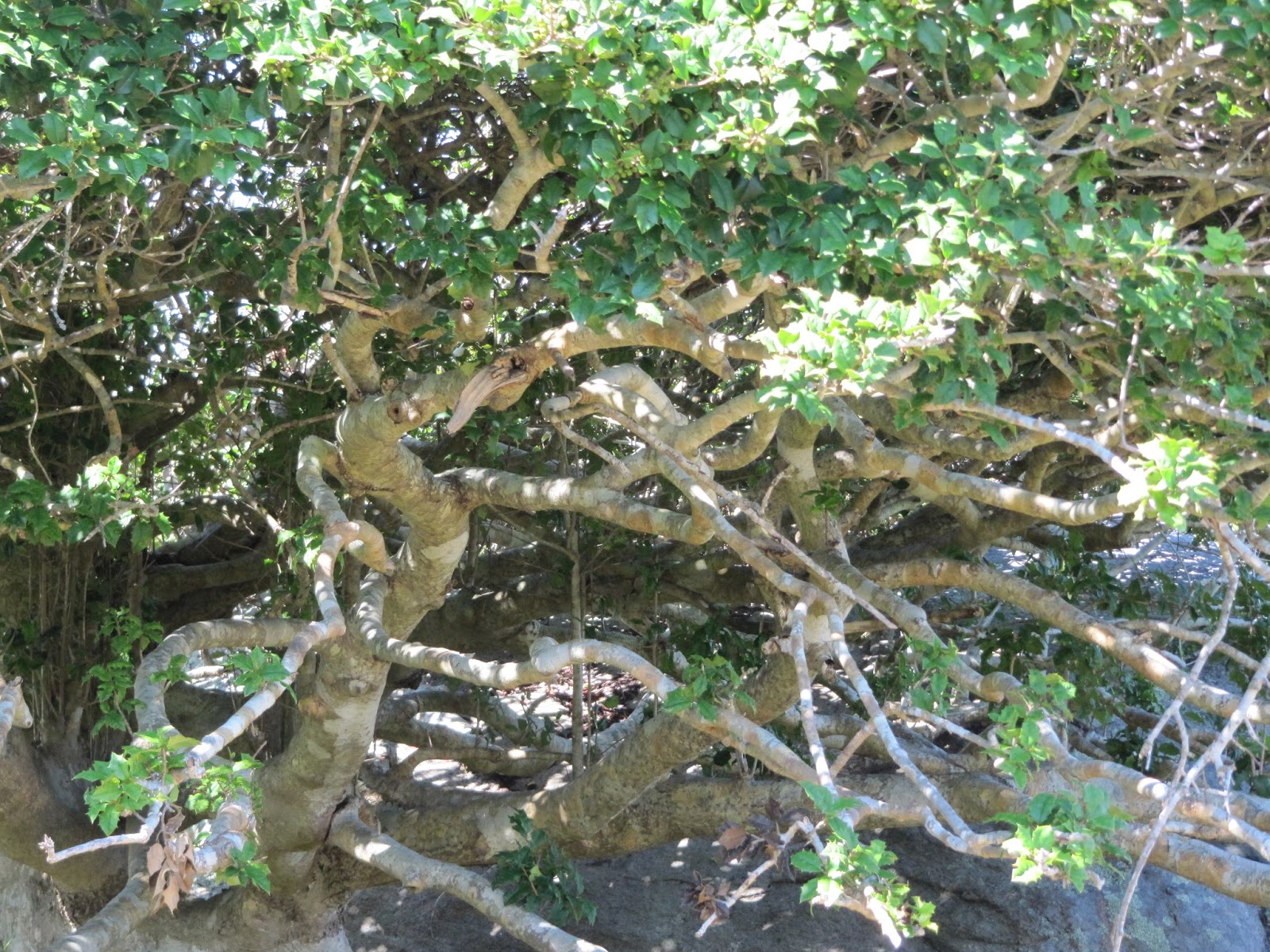
Naushon Tree by Brad Gibson
In the Sadhana Pada of the Yoga Sutras by Patanjali we are introduced to the eight rungs/limbs/steps of yoga whose practice helps us to develop attention as a tool to discriminate between ignorance and awareness and truth from illusion, the means for liberation or enlightenment. One of the eight limbs is aparigraha, which has several meanings, including non-possessiveness, non-holding, non-indulgence, non-acquisitiveness. Verse 2.39 in the Yoga Sutras describes aparigraha as:

aparigraha sthairye janma kathanta sambodhah

When one is steadfast in non-possessiveness or non-grasping with the senses there arises knowledge of the why and wherefore of past and future lives. —trans. by Swami Jnaneshvara


 Aparigraha comes from the word parigraha, which means reaching out for something and claiming it for oneself; the "a" prefix' before parigraha turns it into an antonym. Thus, aparigraha is the concept of non-possessiveness or non-hoarding. Aparigraha means to limit possessions to what is necessary or important and taking what is truly necessary and no more. Nina briefly touched on this topic in one of her earlier postings (see Yama Drama).

Our senses are like portals or gateways into our body, mind and consciousness. We are what we eat, smell, see, hear and touch. Through our senses, we absorb the world around us. If we take in harmonious impressions, we will in turn be healthier. If we absorb disharmonious impressions through our senses, we are inviting with it all kinds of body-mind problems. Through these five senses we get attracted to material possessions and surround ourselves with them. Hoarding is the accumulation of things that may have little or no value. So great is the need to accumulate these things that they then becomes difficult to part with it. Hoarders accumulate and store old newspapers, food cartons, cans, mail, notes, clothes, garbage and other debris. Hoarding begins slowly and builds over time. Hoarders will not give up their possessions as they develop an emotional attachment to their belongings and have a distorted view about the importance/lack of importance of material possessions. People who develop a habit of hoarding identify their possessions as a part of their identities. Losing or disposing of a possession may produce extreme anxiety or a sense of loss and grief. Researchers believe that individuals who are experiencing emotional upheavals in their lives when faced with aging and the possibility of outliving their resources may begin to collect and save as these material possessions provides them a sense of security—sort of a comfort zone.

But hoarding is not just about accumulating material possessions. It is also about hoarding/holding thoughts and emotions that affect our normal mindset and thinking process. Hoarding, be it mental or physical, is associated with an inability to process information and make decisions when confronted with a large amount of information, attention and focus deficits and a failure of categorization. We tend to fill our minds with fear, worry, anxiety, grief, anger, rage, jealousy, and judgments, among others, and we do not let go of these emotions. Over time, these emotions—whether it be bitterness, fear, emotional damage, rejection or abandonment—build up. If you hoard/accumulate unexpressed or suppressed emotions and if they are not getting released, they keep building up in your body. Ultimately these pent-up emotions can trigger mental and/or physical pathological conditions. Thus, hoarding emotions can be devastating to both mind and body.

What is the easiest and effective way to ward off emotional hoarding? A simple method is meditation (dhyana), the cheapest and simplest recourse to a healthy body and mind (see Balancing Your Emotions with Your Breath). While meditation may not cure a person from the act of hoarding, the person having a meditation practice will react to life’s turbulence differently. This reaction and suitable action measures comes from a true awareness; awareness to the emotional turbulence arising from within that has remedial effects. As explained in an earlier post (see Never Go to Bed Angry), the individual will not only have the capacity to transcend the physical and emotional upheaval but will also not evoke the same physical and emotional reactions that are commonly seen in a person who does not meditate.

Just as you take a car for a regular tune up, you also need to detoxify and tune up our body and mind on a periodical basis. Disposing of any unwanted material possessions and detoxifying our mind-riddled emotions on a regular basis is a panacea for healthy aging and living. If you can do it for your car, you might as well think about doing the same for your mind and body.

Monday, May 6, 2013

Ahimsa (Non-Violence) and Healthy Aging

by Ram 
Peaceful Valley by Brad Gibson
Himsa in Sanskrit means violence, which is defined as the intentional use of force or power on self or against a person or a group that results in a physical/psychological harm, mental disturbance, injury or death. Going by this definition, there is no difference between a person who is harboring severe judgment and negativity towards self or others and a person who walks with a gun into a classroom and randomly shoots at the students. Both have committed himsa or violence albeit to different degrees. We have also have heard or witnessed acts of himsa perpetrated in yoga studios as well.

Violence of any kind has profound effects on the health of an individual. Studies have shown the following:
  • The stress of being in an abusive relationship has the obvious physical and psychological impact: it often increases one’s vulnerability to illness and may cause the victim to be more susceptible to disease.
  • Battered victims experience depression, feelings of low self-esteem and helplessness coupled with somatic complaints.
  • Chronic abuse causes serious psychological harm. Victims experience panic disorders, phobias, anxieties and depression that may last for several years. Their ability to trust and form emotional attachments are severely impacted.
  • Victims often complain of enduring the effects of violence over many years and some even develop extreme symptoms years later in response to major life stressors.
Moreover violence severely impacts healthy aging and life expectancy is reduced in traumatic individuals. Recent studies have shown that the United States suffers far more violent deaths than any other wealthy nation. The United States has about six violent deaths per 100,000 residents. Homicide and suicide together account for about a quarter of the years of life lost for U.S. men compared to those in those peer countries. Children who are exposed to different types of violent childhood events suffer from all kinds of stressors that negatively affect their overall development. A ten-year study finds that a traumatic childhood reduces life expectancy by 20 years among adults who experienced six or more particular types of abuse or household dysfunction as kids. Thus, violence in all forms is taking its toll on the life expectancy of the U.S. population. The solution to this grave problem is shunning violence and cultivating ahimsa (non violence), the opposite of himsa. Ahimsa— which also refers to non-harming or non-injury—is the first of the five yamas in the yoga sutras of Patanjali. The five yamas serve as moral, ethical and societal guidelines for a harmonious living. Patanjali considered the yamas as universal vows, and preached that they be practiced on all levels: by way of thoughts, actions, and words. Verse 2.3 in the Yoga Sutras describes ahimsa as:

ahimsa pratishthayam tat vaira-tyagah

As a Yogi becomes firmly grounded in non-injury (ahimsa), other people who come near will naturally lose any feelings of hostility
trans. by Swami Jnaneshvara.

Going by the above translation, ahimsa would mean physical, mental, and emotional non-violence towards self and others. For those who are always in contact with individuals who experience natural inner peace and a non-harming attitude, there is a tendency for them to give up their hostilities, ill will or aggression in return. It is a natural process that everyone experiences in the presence of a truly non-violent person.

How does one cultivate ahimsa? Empathy and compassion are two excellent tools to foster ahimsa as they allow us to accept events as they are and act with an open and loving heart. Empathy and compassion replace violent tendencies with kindness, acceptance and love. Practicing it on oneself helps to cultivate the same feelings towards others. So how about cultivating some ahimsa in our lives starting now!

Kindly and non-violently,

Ram